

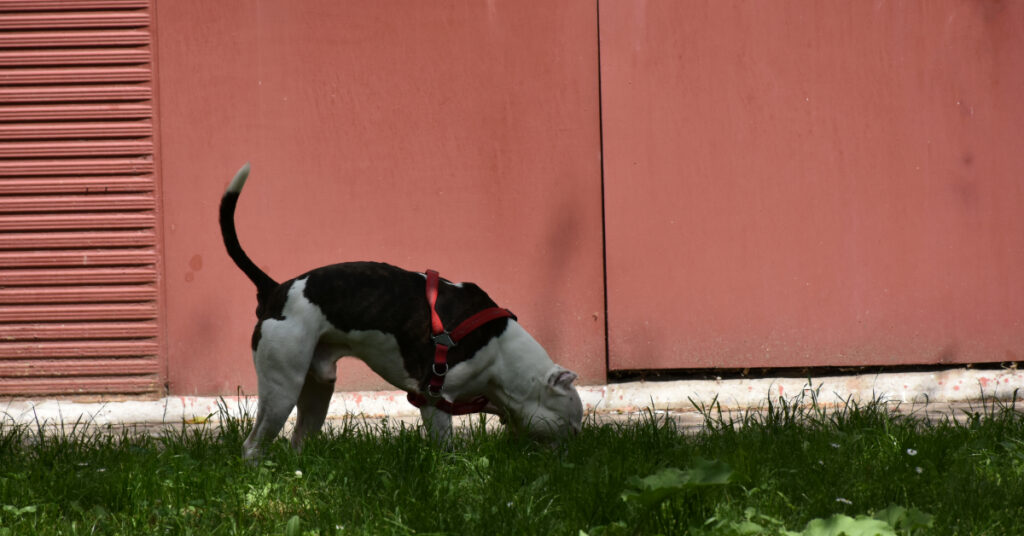
Why do dogs eat grass? It’s one of the most common questions veterinarians hear, and the short answer is that it’s usually nothing to worry about. Most dogs eat grass occasionally, and in many cases it’s a completely normal behavior. That said, there are times when grass eating can signal something more significant. This guide will help you understand why dogs eat grass, when it’s harmless, and when a call to the vet makes sense.
Why Do Dogs Eat Grass?
Researchers and veterinary professionals have studied this behavior extensively, and while there’s no single definitive explanation, several well-supported theories help answer the question of why dogs eat grass.
Natural Instinct and Dietary Behavior
Dogs are not strict carnivores. Their wild ancestors consumed plant material regularly as part of their diet, either directly or through the stomach contents of prey animals. Eating grass may simply be an instinctive behavior carried down through generations of canine evolution.
Some dogs eat grass the same way they eat other non-food items, out of curiosity, boredom, or simply because it’s available. This type of grass eating tends to be casual, infrequent, and not linked to any signs of illness.
Dietary Fiber and Nutritional Needs
Some experts suggest that dogs eat grass as a way to supplement fiber in their diet. Grass contains cellulose, a form of dietary fiber, and some dogs may seek it out when their digestive system needs a little extra roughage. If your dog is eating grass frequently and seems motivated rather than distressed, it may be worth discussing their diet with your veterinarian. A simple dietary adjustment may reduce the behavior.
Stomach Upset
One of the most widely held beliefs about why dogs eat grass is that they do so to induce vomiting when they feel unwell. The idea is that grass irritates the stomach lining and triggers vomiting as a way to relieve discomfort.
Research has shown, however, that fewer than 25 percent of dogs actually vomit after eating grass, and most don’t appear sick before doing so. Still, if your dog is eating grass with visible urgency or distress and then vomiting, gastrointestinal upset is a reasonable consideration.
Is Eating Grass Bad for Dogs?
Eating grass itself is generally not harmful to dogs. The grass found in most residential yards is not toxic to dogs, and small amounts pass through the digestive system without causing problems.
The concerns around grass eating relate more to what might be on the grass than the grass itself. Two important factors to consider:
- Pesticides and herbicides: Treated lawns can expose your dog to chemicals that may cause nausea, vomiting, or more serious toxicity. If your dog has access to grass, make sure it has not been recently treated.
- Parasites: Grass can harbor intestinal parasites, particularly in areas where other animals defecate. Regular deworming and fecal testing help manage this risk.
When Is Grass Eating a Normal Dog Behavior?
Grass eating can be considered within the range of normal behavior when all of the following are true:
- Your dog eats grass occasionally, not obsessively
- They appear calm and comfortable before and after eating it
- They are not vomiting repeatedly or showing signs of illness
- Their overall health, appetite, and energy levels are normal
Many dogs eat grass throughout their lives without any health consequences. If your dog falls into this category, there’s no cause for concern.
When Should You Call the Vet About Grass Eating?
While grass eating is usually harmless, there are situations where it becomes a signal worth following up on. Contact Veterinary Medical Center of Easton if your dog’s grass eating is accompanied by any of the following:
- Frequent or repetitive vomiting after eating grass
- Diarrhea, especially if it persists for more than 24 hours
- Loss of appetite or refusal to eat regular food
- Signs of abdominal pain, bloating, or discomfort
- Sudden increase in grass eating that seems compulsive or anxious in nature
A sudden change in your dog’s behavior is always worth a conversation with your vet, even if the behavior itself seems minor. Dogs communicate through behavior, and changes in habits are often early signals of health shifts.
Can Grass Eating Be a Sign of Boredom or Anxiety?
Yes. Some dogs eat grass as a form of behavioral outlet. Dogs that are under-stimulated, bored, or experiencing separation anxiety may engage in repetitive behaviors, including grass eating, as a coping mechanism. If your dog seems to eat grass most intensely when left alone, when they haven’t had enough exercise, or when there are changes in their environment, behavioral factors may be at play. Talk to your vet about strategies to enrich your dog’s environment and reduce anxiety-driven behaviors.
What Your Dog’s Grass Habit Is Really Telling You
Why do dogs eat grass? Usually because they’re dogs, and it’s a deeply rooted, often harmless behavior. The vast majority of grass eaters are perfectly healthy animals doing something that comes naturally to them. Your job as a pet owner is simply to observe the context, watch for warning signs, and check in with your vet when something doesn’t feel right.
Our team at Veterinary Medical Center of Easton in Easton, MD is always available to answer your questions about your dog’s behavior and health. Call us at (410) 822-8505 today. We’re here to help you understand what’s normal for your pet and what deserves a closer look.