

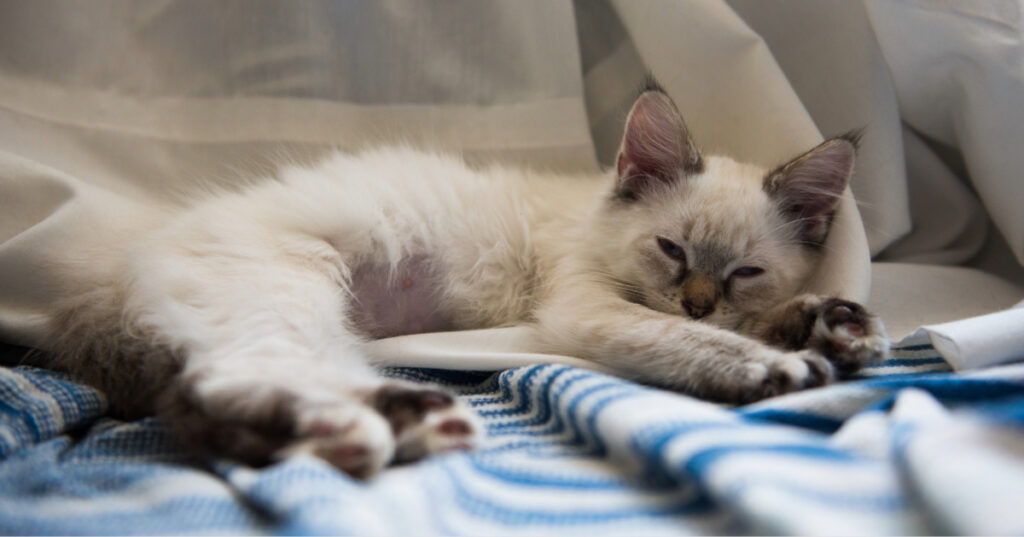
A long nap looks like your cat curled up comfortably, sleeping soundly, and waking up ready to eat or engage. Cat lethargy looks different: a cat that seems disconnected, uninterested in food, and withdrawn even when they’re awake. That distinction is what matters, and it’s one every cat owner should understand. Cats are champion sleepers by nature, logging up to 16 hours a day, which makes it surprisingly easy to miss the early signs that something is off. Below, we’ll discuss exactly what separates normal feline rest from true lethargy, what causes it, and how to know when it’s time to pick up the phone and call your vet.
How Much Do Cats Normally Sleep?
Before worrying, it helps to understand what’s normal. Cats are crepuscular, meaning they are most active at dawn and dusk and naturally sleep through large portions of the day. Adult cats typically sleep 12 to 16 hours per day, while kittens and senior cats may sleep even more.
This sleep pattern is so pronounced that many owners joke their cat has a better rest schedule than they do. The key point is that all of this sleep is normal, and it doesn’t indicate illness on its own. What matters is what the cat does during their waking hours.
What Is Cat Lethargy?
Cat lethargy goes beyond a long nap. A lethargic cat is one that seems uninterested in the things that typically engage them. Cat lethargy refers to a noticeable decline in energy, responsiveness, and overall engagement with their surroundings, even during the hours when they’re typically awake and active.
This distinction is important. A cat curled up and sleeping soundly is doing exactly what cats do. A cat lying in an unusual spot, unresponsive to their favorite sounds or activities, disinterested in food, and not engaging with family members in their normal way is showing signs of lethargy.
Signs of Lethargy in Cats: What to Watch For
Recognizing cat lethargy requires knowing your cat’s individual baseline. The following signs are common indicators that a cat’s behavior has shifted beyond normal tiredness:
- Sleeping significantly more than usual, including during times they’re normally active
- Lack of interest in food, treats, or water
- Not grooming themselves or showing decreased grooming habits
- Hiding in unusual places or withdrawing from the family
- Not responding to play, toys, or familiar sounds that typically excite them
- Appearing weak, unsteady on their feet, or reluctant to jump
If your cat is showing several of these signs at once, or if a normally social cat has become reclusive and quiet, that warrants attention.
What Causes Cat Lethargy?
Lethargy in cats is a symptom, not a diagnosis. It can arise from a wide variety of causes, ranging from minor to medically significant. Some of the most common include:
Illness or Infection
Upper respiratory infections, urinary tract infections, and other common feline illnesses frequently cause cat lethargy. A sick cat conserves energy the same way humans do, spending more time resting and less time engaging. If your cat’s lethargy is accompanied by sneezing, nasal discharge, coughing, straining to urinate, or any other physical symptoms, illness is a likely cause and veterinary evaluation is needed.
Pain
Cats are known for concealing pain, but lethargy is one of the ways that pain often shows up. A cat with dental disease, arthritis, an injury, or internal pain may become quieter, less active, and less interested in their normal routines. Watch for any changes in how your cat moves, holds their body, or responds to touch. Even subtle shifts can point to discomfort that deserves a professional evaluation.
Chronic Disease
Conditions such as kidney disease, hyperthyroidism, diabetes, and heart disease can all cause a cat to become lethargic over time. Often these conditions develop gradually, so the lethargy comes on slowly rather than all at once. If your cat has been less energetic over the past weeks or months, and especially if you’ve also noticed changes in appetite, weight, or litter box habits, a comprehensive wellness exam and bloodwork at Veterinary Medical Center of Easton can help identify what’s happening.
Stress or Environmental Change
Cats are sensitive to change. A new baby, a move, a new pet, or even rearranged furniture can trigger a stress response that looks a lot like lethargy. A stressed cat may eat less, sleep more, and retreat from family activity. If your cat’s lethargy began after a clear change in the home environment, stress is worth considering. Your veterinarian can help you develop a plan to support your cat through transitions.
Vaccinations or Medication
It’s not uncommon for cats to be temporarily lethargic following vaccinations or after starting a new medication. This type of lethargy is generally mild and short-lived, resolving within 24 to 48 hours. If your cat’s lethargy following a vaccine or medication lasts longer than a couple of days or is accompanied by swelling, vomiting, or facial changes, contact your veterinarian.
When Should You Take a Lethargic Cat to the Vet?
The following situations call for a same-day or emergency veterinary visit:
- Lethargy accompanied by difficulty breathing or open-mouth breathing
- Not eating or drinking for more than 24 to 48 hours
- Vomiting or diarrhea alongside lethargy
- Visible signs of pain, injury, or distress
- Collapse, weakness, or inability to stand or walk
- Any sudden or severe change in behavior or responsiveness
When in doubt, trust your instincts as a pet owner. You know your cat better than anyone. If something feels off, a call to Veterinary Medical Center of Easton is always the right move.
How Do Vets Diagnose Lethargy in Cats?
Because cat lethargy can point to so many different underlying causes, your veterinarian will approach it systematically. A comprehensive physical exam is the starting point. From there, the diagnostic workup typically includes bloodwork to assess organ function, a urinalysis, and sometimes imaging such as X-rays or an ultrasound.
The goal is to identify the specific cause of the lethargy so it can be treated directly. At Veterinary Medical Center of Easton, our team is experienced in evaluating feline patients comprehensively and developing targeted treatment plans based on what the diagnostics reveal.
Your Cat’s Energy Level Is One of Their Most Important Health Signals
Cat lethargy is meaningful precisely because cats sleep so much already. When a naturally restful animal becomes even more withdrawn, disengaged, or inactive than their norm, the body is often sending a message worth heeding.
Pay attention to your cat’s individual patterns, not just average feline behavior. If your cat’s behavior has shifted and it’s been more than a day or two, reach out to our team at Veterinary Medical Center of Easton in Easton, MD. Call us at (410) 822-8505 today. Early evaluation leads to better outcomes, and that peace of mind is worth a phone call.