

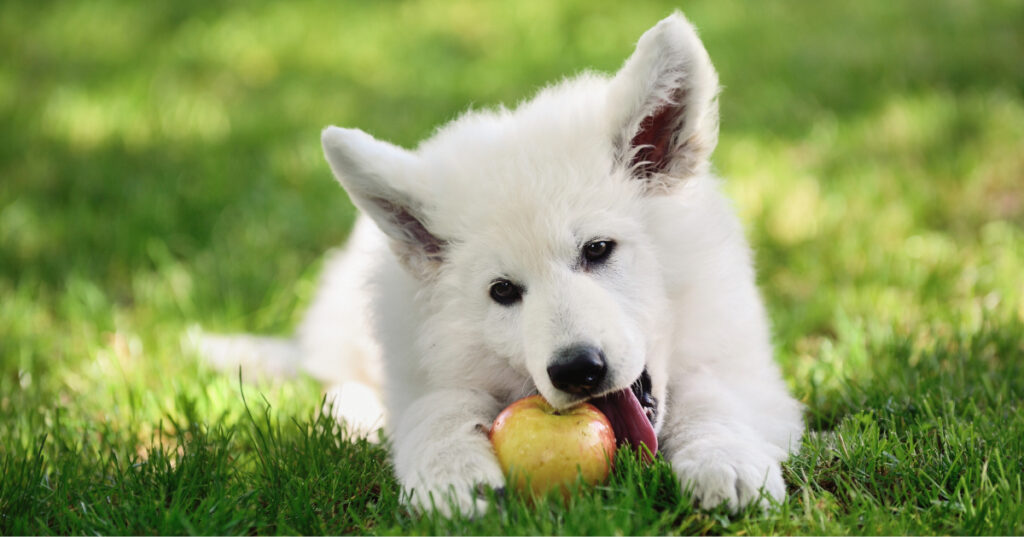
Yes, dogs can eat apples, and for most healthy dogs, this common fruit makes a safe, enjoyable treat. Apples for dogs are a source of vitamins, fiber, and natural sweetness that many pups genuinely enjoy. That said, there are important preparation steps and a few parts of the apple that should always be kept away from your dog. Read on to learn everything you need to know about feeding apples to your dog safely.
Are Apples Good for Dogs?
Apples are not just safe for dogs; they can offer some genuine nutritional benefits when fed in moderation. This fruit contains vitamin A, vitamin C, and dietary fiber, which support immune health, digestion, and overall wellness.
Because apples are relatively low in protein and fat, they can be a smart snack option for dogs that are overweight or on a restricted diet. The crunchy texture may also contribute to light dental hygiene by scraping the tooth surface as your dog chews, though this is not a substitute for regular dental care.
What Parts of the Apple Are Safe for Dogs?
Before giving your dog an apple, it’s important to know which parts are safe and which need to be removed. Here’s a quick guide:
Safe: The Flesh
The white, fleshy part of the apple is the part that’s safe for dogs to eat. This is where most of the fiber and vitamins are found. Slice it into small, manageable pieces to reduce the risk of choking, especially for smaller dogs.
Safe (with prep): The Skin
Apple skin is generally safe for dogs and contains beneficial fiber. However, always wash the apple thoroughly before offering it to your dog. Pesticide residue on the skin is a concern, particularly with conventionally grown apples.
Not Safe: The Seeds
Apple seeds contain a compound called amygdalin, which releases cyanide when metabolized. While a dog would need to consume a significant quantity of seeds for toxicity to become a concern, there’s no reason to take the risk. Always core the apple and remove the seeds before giving any to your dog.
Not Safe: The Core and Stem
The apple core is hard and dense, which poses a choking hazard and may cause digestive issues. The stem presents a similar risk. Remove both before serving apple to your dog.
Can Dogs Eat Apple Products Like Applesauce or Apple Juice?
Giving dogs apples in their whole, sliced form is the safest approach. Many apple-derived products contain added sugars, artificial sweeteners like xylitol, or preservatives that can be harmful to dogs.
Xylitol in particular is highly toxic to dogs and is found in some commercially prepared applesauces and fruit products. Always read ingredient labels before offering any processed food to your dog, and when in doubt, skip it. Plain, unsweetened applesauce in very small amounts is generally considered acceptable, but sliced fresh apple is always the better choice.
How Much Apple Can a Dog Eat?
Treats of any kind, including fruit, should make up no more than 10 percent of your dog’s daily calorie intake. For most dogs, one to three apple slices is a reasonable portion. Overfeeding apples can cause digestive upset due to the natural sugar and fiber content. If you’re introducing apples to your dog for the first time, start with a small piece and watch for any signs of gastrointestinal discomfort like loose stool, gas, or vomiting. Most dogs tolerate apples well, but individual responses can vary.
What Dogs Should Avoid Apples?
While apples are safe for most dogs, there are some exceptions to keep in mind:
- Dogs with diabetes: Apples contain natural sugar and should be given only sparingly to diabetic dogs. Ask your veterinarian about appropriate fruit options.
- Dogs with gastrointestinal sensitivity: High-fiber foods can sometimes aggravate dogs prone to digestive issues.
- Dogs prone to weight gain: Even healthy snacks add calories, so portion control matters.
If your dog has a known health condition or dietary restriction, check with our veterinary team at Veterinary Medical Center of Easton before adding new foods to their diet.
How to Safely Prepare Apples for Dogs
Preparing apples for your dog is simple and takes only a moment:
- Wash the apple thoroughly under running water
- Remove the core, stem, and all seeds
- Cut the flesh into appropriately sized slices based on your dog’s size
- Offer one to three slices as a treat, not a meal replacement
Frozen apple slices can be a refreshing treat on warm days and may provide some soothing relief for puppies who are teething.
What If My Dog Ate Apple Seeds or Core?
If your dog accidentally ate a few apple seeds or swallowed a piece of core, don’t panic. A small accidental exposure is unlikely to cause serious harm in most dogs. Monitor your dog for signs of choking, abdominal discomfort, vomiting, or changes in behavior.
If your dog consumed a large amount of seeds or is showing any concerning symptoms, contact Veterinary Medical Center of Easton or your nearest emergency veterinary clinic promptly.
Sharing Snacks Safely Starts With the Right Information
Dogs can eat apples safely as long as they’re prepared correctly and fed in moderation. It’s one of those treats that many dogs love and that offers a bit of nutritional value alongside the enjoyment. Like any addition to your dog’s diet, starting slow and paying attention to how your pet responds is the smart approach.
Have questions about what your dog can and can’t eat? Call (410) 822-8505 today. Our team at Veterinary Medical Center of Easton is happy to help you navigate safe, healthy nutrition choices for your pet.