
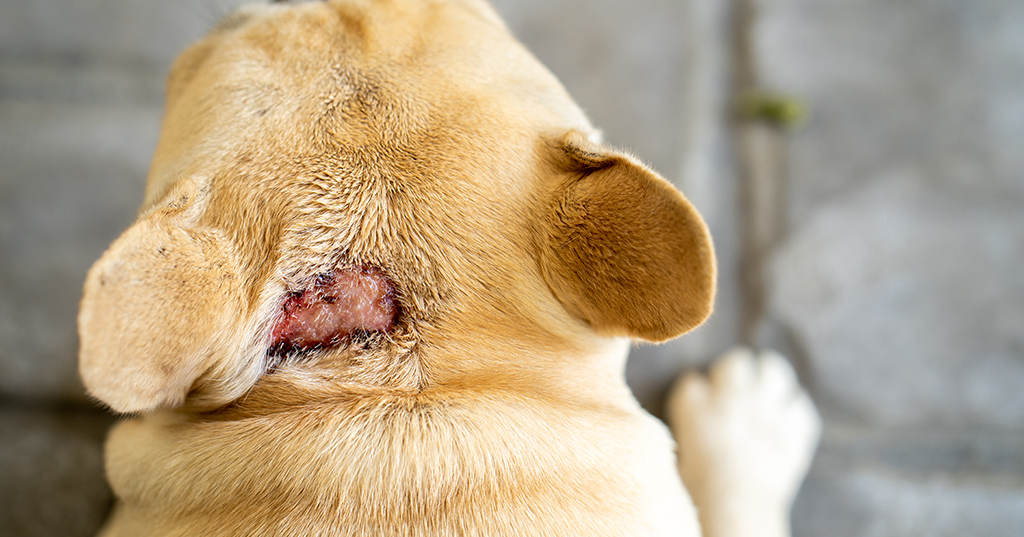
A dog hot spot looks like a red, moist, inflamed patch of skin that often oozes, smells bad, and has matted or missing fur around it. These sores can appear almost overnight and grow quickly, which is why many pet owners in Easton notice them only after their dog has been licking or scratching one area for hours. Hot spots are one of the most common skin complaints veterinarians see, especially during warm, humid Eastern Shore summers and wet autumn months. The good news is that a dog hot spot usually responds well to professional care when it gets caught early. In this guide, the team at Veterinary Medical Center of Easton explains what these lesions are, how to recognize them, what triggers them, how veterinarians treat them, and what you can do to lower the odds of your dog developing another one.
What Is a Hot Spot on a Dog?
A hot spot is a localized area of skin infection and inflammation that tends to develop fast and spread if left alone.
Veterinarians call this condition acute moist dermatitis or pyotraumatic dermatitis. The second term describes how it works: “pyo” refers to infection, and “traumatic” refers to the damage your dog causes by licking, chewing, or scratching. A dog hot spot usually starts with something that makes the skin itchy or painful. Your dog responds by working at the spot, which breaks down the skin barrier, traps moisture, and gives bacteria the perfect place to multiply. The infection then makes the area even itchier, and the cycle keeps feeding itself.
Why Hot Spots Spread So Quickly
Many owners are surprised that a small irritated patch in the morning can become a sore the size of a palm by evening. Thick fur traps heat and moisture against the damaged skin, and constant licking keeps the surface wet. Under a dense coat, a dog hot spot can grow for a while before anyone sees it, so it often looks dramatic by the time it gets noticed.
Which Dogs Get Hot Spots Most Often?
Any dog can develop a hot spot, but some dogs face a higher risk. Breeds with thick or double coats, such as Golden Retrievers, Labrador Retrievers, German Shepherds, Saint Bernards, and Newfoundlands, show up frequently. Dogs that swim in the Choptank River or the Chesapeake Bay, dogs with allergies, and dogs that are overdue for grooming also tend to experience more of these painful sores. Age matters less than coat type and lifestyle, so younger and older dogs alike can be affected.
How Can You Recognize a Dog Hot Spot?
Most hot spots share a few clear visual features that set them apart from other skin problems.
A typical dog hot spot is a round or irregular patch of bright red, raw skin with a sharp border between the sore and the healthy skin around it. The surface often looks wet or shiny because of oozing fluid, and the fur at the edges may be clumped, crusty, or completely gone. When the hair dries over the lesion, it can form a mat that hides how large the damage underneath really is.
Watch for these signs that point toward a dog hot spot:
- A red, moist, or weeping patch of skin, often warm to the touch
- Hair loss or matted, sticky fur covering a sore area
- Yellowish discharge, scabs, or crusting along the edges
- A sour or unpleasant odor coming from one spot on the body
- Constant licking, chewing, rubbing, or scratching at the same area
- Flinching, whining, or growling when you touch that part of the body
Where Hot Spots Usually Show Up
Hot spots can appear anywhere, but certain locations come up again and again. The side of the face and below the ears are common sites, especially in dogs with ear infections. The neck, hips, base of the tail, and outer thighs are also frequent targets, since dogs can easily reach those areas to lick or scratch.
Hot Spot or Something Else?
Several conditions can look similar at first glance, including ringworm, mange, deeper bacterial infections, allergic reactions, and even certain skin tumors. Because the treatment for each one differs, a veterinary exam gives you a clear answer about what is going on with your dog’s skin.
What Causes Hot Spots on Dogs?
Nearly every dog hot spot begins with an underlying trigger that makes your dog want to scratch or lick.
The hot spot itself is really the end result of that itch. Finding and addressing the original cause matters just as much as healing the sore, because a dog that stays itchy is likely to create a new lesion somewhere else. Common triggers include:
- Fleas and other parasites: Flea bites are one of the leading causes, particularly in dogs with flea allergy dermatitis, where a single bite can spark intense itching.
- Environmental allergies: Pollen, grasses, mold, and dust mites can all leave skin inflamed and itchy during certain seasons.
- Food allergies: Sensitivities to specific proteins can show up as chronic skin irritation.
- Ear infections: Dogs with sore ears often scratch at their head and neck, which can lead to facial hot spots.
- Moisture trapped in the coat: Swimming, bathing, or rain followed by slow drying creates warm, damp conditions under the fur.
- Matted or poorly groomed fur: Tangles pull on the skin and hold in heat and moisture.
- Pain or boredom: Joint discomfort, anal gland problems, stress, or a lack of activity can lead to repetitive licking.
The Role of Weather on the Eastern Shore
Talbot County’s humid summers and damp shoulder seasons make it easier for a dog hot spot to form. Heat and humidity keep thick coats from drying out, and peak flea and pollen seasons line up with the warmest months. Veterinary Medical Center of Easton often sees a rise in hot spot cases from late spring through early fall, though dogs with allergies can struggle year-round.
How Do Veterinarians Treat a Dog Hot Spot?
Professional treatment focuses on two goals: healing the sore and stopping whatever caused it.
Since hot spots are painful, many dogs will not tolerate having the area handled at home, and trying to manage one without guidance can delay healing or mask a more serious problem. A veterinarian can examine the lesion closely, confirm that it really is a hot spot, and build a care plan around your dog’s specific needs.
What to Expect at the Appointment
During a visit, your veterinarian will look at the size and depth of the sore, check the rest of the skin and coat, and ask about recent changes in diet, activity, grooming, or environment. In many cases, the veterinary team gently clips the fur around the hot spot so they can see its true size and let the area breathe. They clean the skin with appropriate products, and some dogs need light sedation if the area is especially sore. Depending on what the exam shows, the veterinarian may recommend prescription medications to relieve itching, calm inflammation, or treat infection. Diagnostic tests such as skin cytology can help confirm whether bacteria or yeast are involved.
Protecting the Area While It Heals
Your veterinarian may also suggest a recovery cone or protective garment so your dog cannot keep licking the spot. Follow-up visits allow the team to confirm the skin is healing well. If your dog gets hot spots repeatedly, your veterinarian may recommend allergy testing, a diet trial, or parasite control changes to get to the root of the problem.
When to Call Your Veterinarian
Schedule an exam promptly if you notice a sore that is growing, bleeding, very painful, or paired with lethargy or a reduced appetite. Waiting even a day or two can allow a dog hot spot to double in size. You can reach Veterinary Medical Center of Easton at (410) 822-8505 to set up a visit.
Can You Prevent Hot Spots on Your Dog?
You cannot rule out every hot spot, but a few consistent habits can greatly reduce how often they happen.
Prevention mostly comes down to limiting the triggers that make your dog itch and keeping the coat in good condition. Helpful habits include:
- Keeping your dog on year-round flea and tick prevention recommended by your veterinarian
- Brushing regularly to remove loose undercoat and prevent mats, especially in double-coated breeds
- Drying your dog thoroughly after swims, baths, and rainy walks, down to the skin
- Scheduling professional grooming before hot, humid months
- Giving your dog plenty of exercise and mental enrichment to reduce boredom licking
- Talking with your veterinarian about allergy management if your dog itches seasonally
Watch for Early Warning Behaviors
The best time to stop a dog hot spot is before it fully forms. Pay attention if your dog keeps returning to one area to lick, nibble, or scratch, or if you feel a damp or warm patch while petting. Running your hands through the coat once a day takes only a minute and can help you catch problems early, especially on dogs with dense fur.
Routine Checkups Make a Difference
Wellness exams give your veterinarian a chance to spot skin changes, ear problems, and allergy patterns before they lead to painful sores. Pets with a history of dog hot spot flare-ups often benefit from a long-term plan that addresses their specific triggers.
Get Help for Your Dog’s Itchy Skin in Easton
If your dog has a red, raw, or oozing patch of skin, a quick veterinary visit can bring relief and help prevent the sore from spreading. A dog hot spot may look alarming, but most heal well once a veterinarian identifies the cause and starts the right treatment plan. Recurring hot spots are often a sign of an underlying issue such as allergies or parasites, and those deserve a closer look too. The caring team at Veterinary Medical Center of Easton works with pet owners throughout Easton and Talbot County to diagnose skin problems, treat painful lesions, and create prevention plans that fit each dog’s lifestyle. Whether your dog is dealing with a first hot spot or a repeat flare-up, our veterinarians are ready to help your pet feel comfortable again. Call (410) 822-8505 today to schedule an appointment.